291/2 Le Van Hien, Da Nang, Vietnam
hi@simplyvietnamtravel.com
+84 793 553 385
Mon – Sun 8.00 – 18.00

 travel
February 23, 2026
travel
February 23, 2026
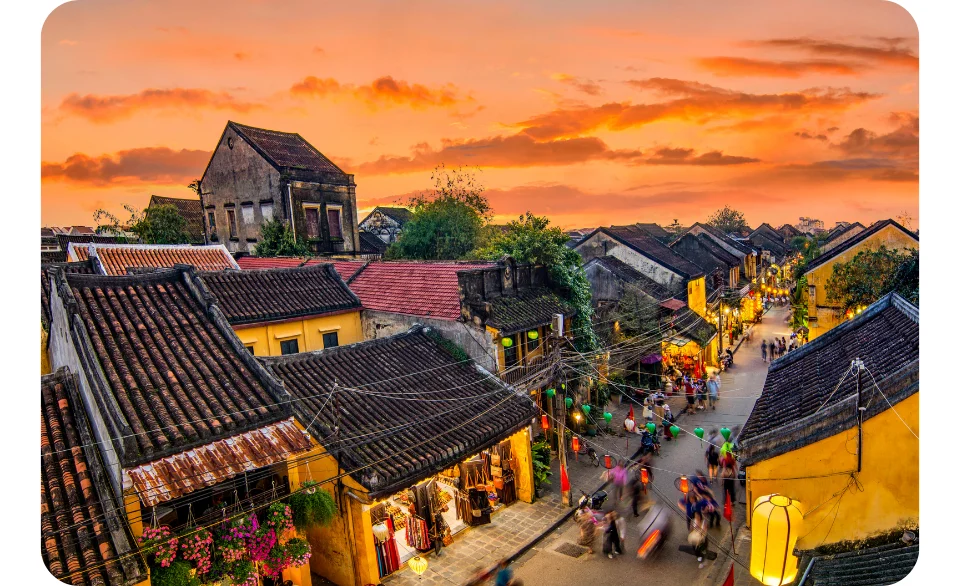
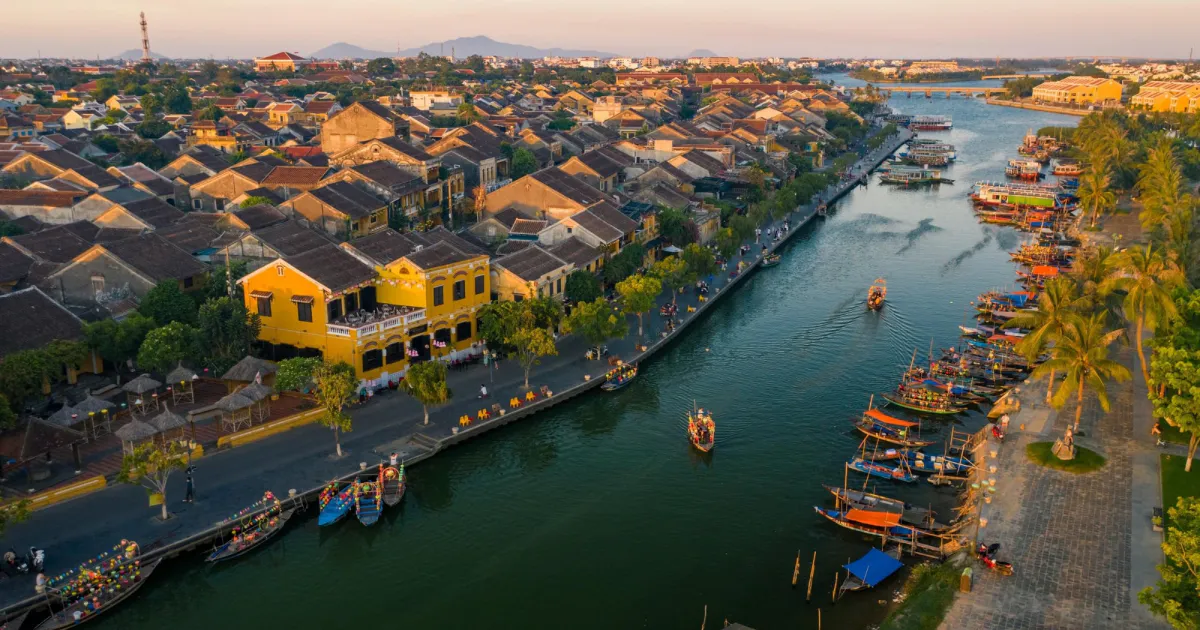
Hoi An ancient town in Vietnam is not merely a tourist destination on the central coast; it is a living symbol of the harmonious fusion of Eastern and Western cultures. Having weathered the countless ups and downs of history, this locale still preserves an almost intact ensemble of ancient architecture, featuring over 1,000 monuments ranging from communal houses, pagodas, and ancient homes to historic wharves, wells, and tombs. The tranquility of the moss-covered yellow walls and the unhurried pace of life create a powerful allure, making Hoi An an indispensable stop for anyone seeking to explore cultural roots and the former prosperity of a once-legendary trading port.
The history of the town began during the Sa Huynh culture period, but its most glorious era emerged in the 16th and 17th centuries under the Nguyen Lords. Thanks to open-door policies and the patronage of monarchs, Hoi An became the most bustling commercial port in Southeast Asia. It was a place where ships from Japan, China, and Western nations such as the Netherlands, Portugal, and France docked to exchange goods, ranging from ceramics and silk to agarwood.
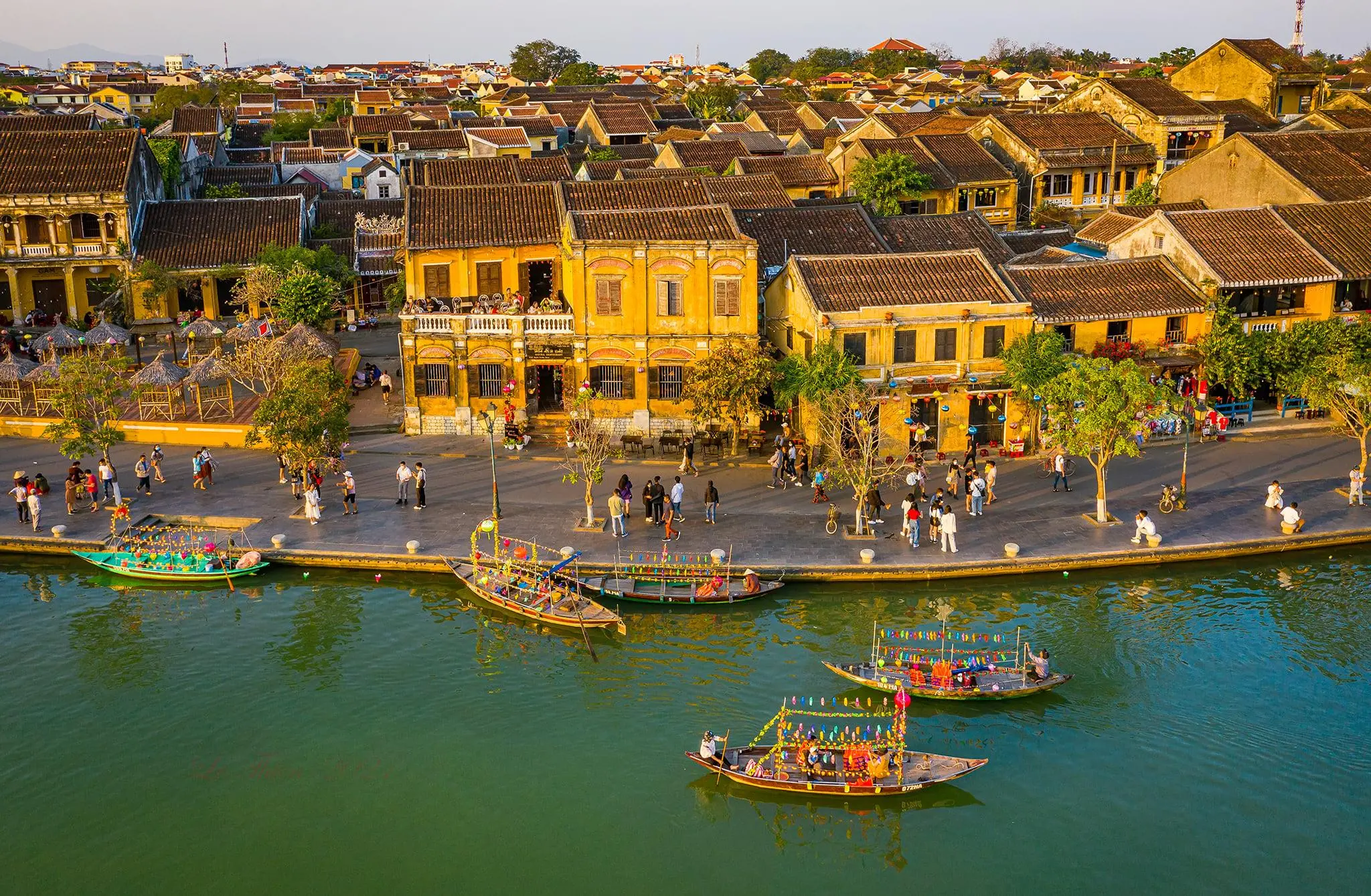
The strategic geographical location by the Thu Bon River, where the water flows into the vast sea, not only brought economic prosperity but also transformed this land into a cultural melting pot. The long-standing cohabitation between the indigenous Vietnamese and foreign merchant communities created a unique urban identity. UNESCO’s recognition of Hoi An ancient town Vietnam as a World Cultural Heritage site in 1999 serves as a testament to the unique historical value and the relentless preservation efforts of the local government and people.
The architecture in Hoi An is a masterful blend of traditional Vietnamese styles and foreign influences, creating an inseparable whole.
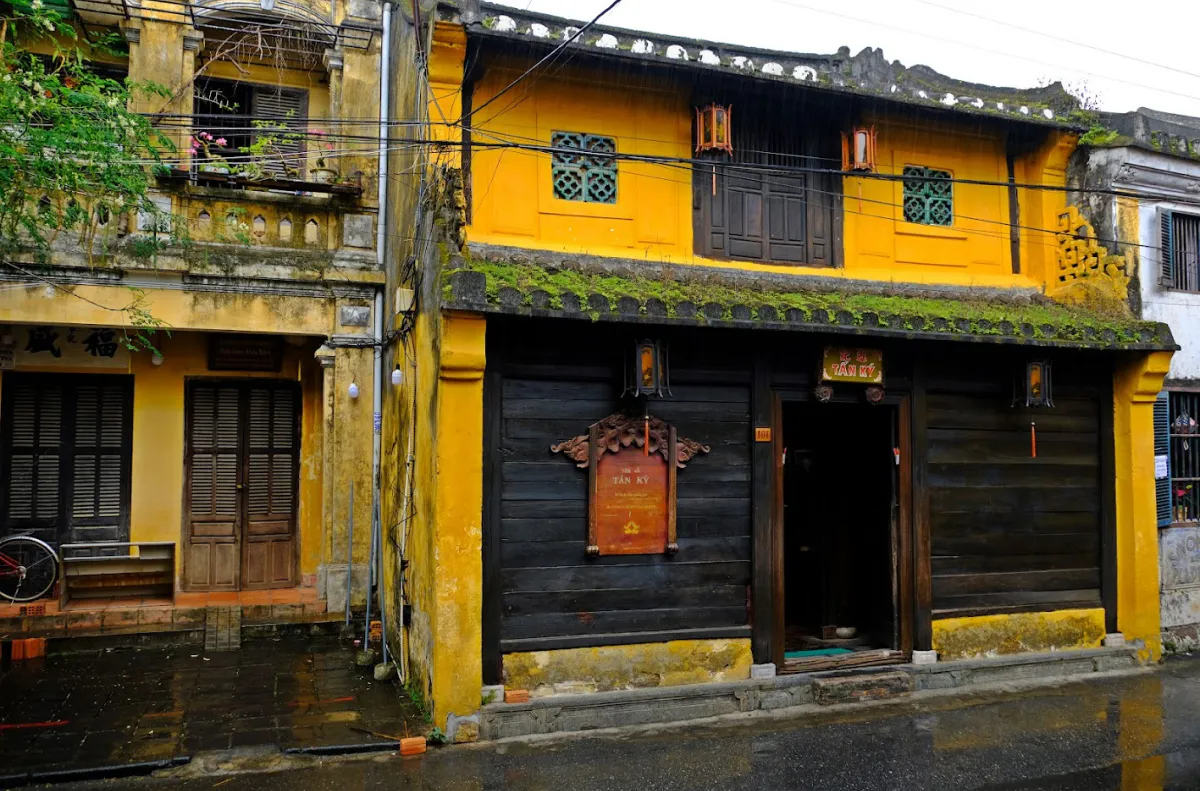
The most recognizable feature is the tube-shaped houses with extreme depth but narrow width. The structure typically consists of a load-bearing wooden frame, thick brick walls, and yin-yang tiled roofs adorned with spiritual protective symbols. The interior space is divided into several layers: the front is for business, the middle for worship and receiving guests, and the back for living quarters and storage. Separating these layers are open-air courtyards (skylights) that help regulate natural light and air, creating a ventilated feel despite the houses stretching dozens of meters in length.
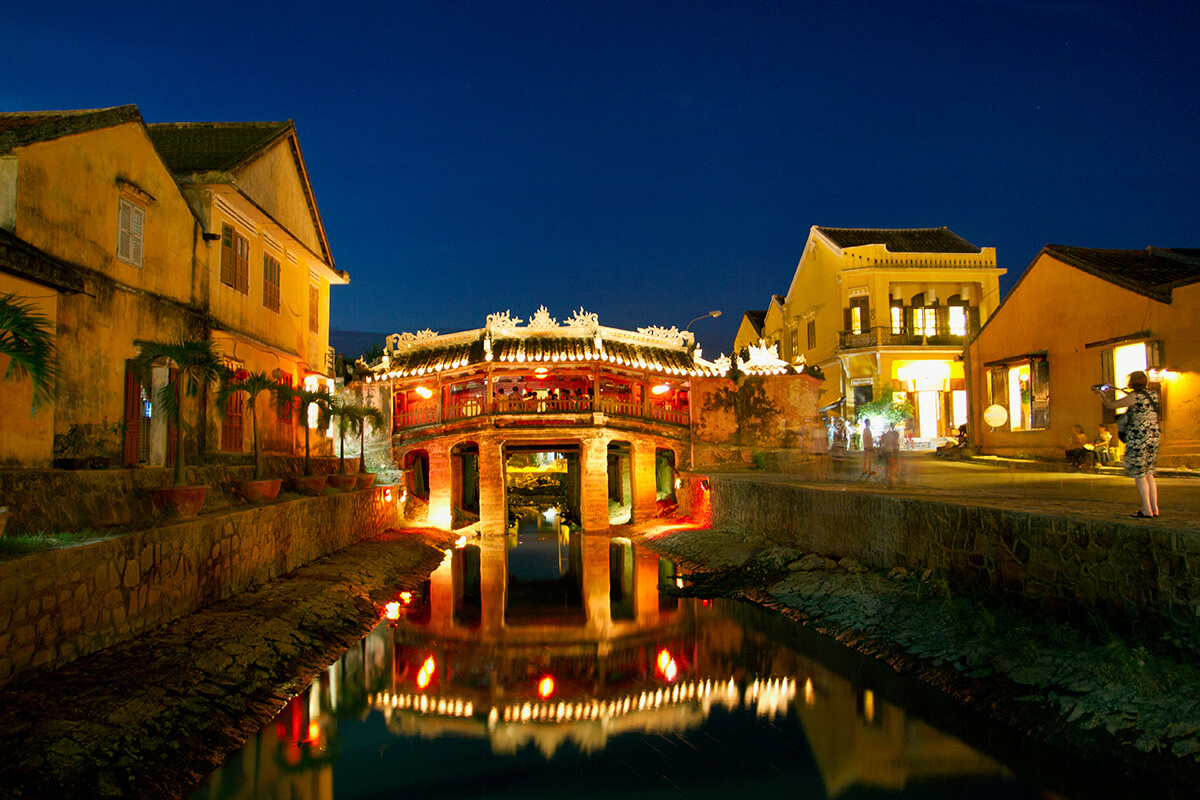
The Japanese Bridge (Lai Vien Kieu) is considered the heart of the ancient town. With its unique arched architecture, intricate carvings of dragons and clouds, and guardian animal statues at both ends, this structure reflects the deep respect of Japanese merchants for the local deities. Additionally, assembly halls such as Phuc Kien, Quang Dong, Trieu Chau, and Hai Nam—with their vibrant colors, monolithic stone pillars, and exquisite bas-reliefs—serve as places for community bonding and the preservation of Chinese beliefs. Every small detail within Hoi An ancient town Vietnam carries its own feng shui significance or historical legend.
The vitality of Hoi An lies not only in its mossy bricks or old tiles but also in the spiritual life and daily breath of its people.
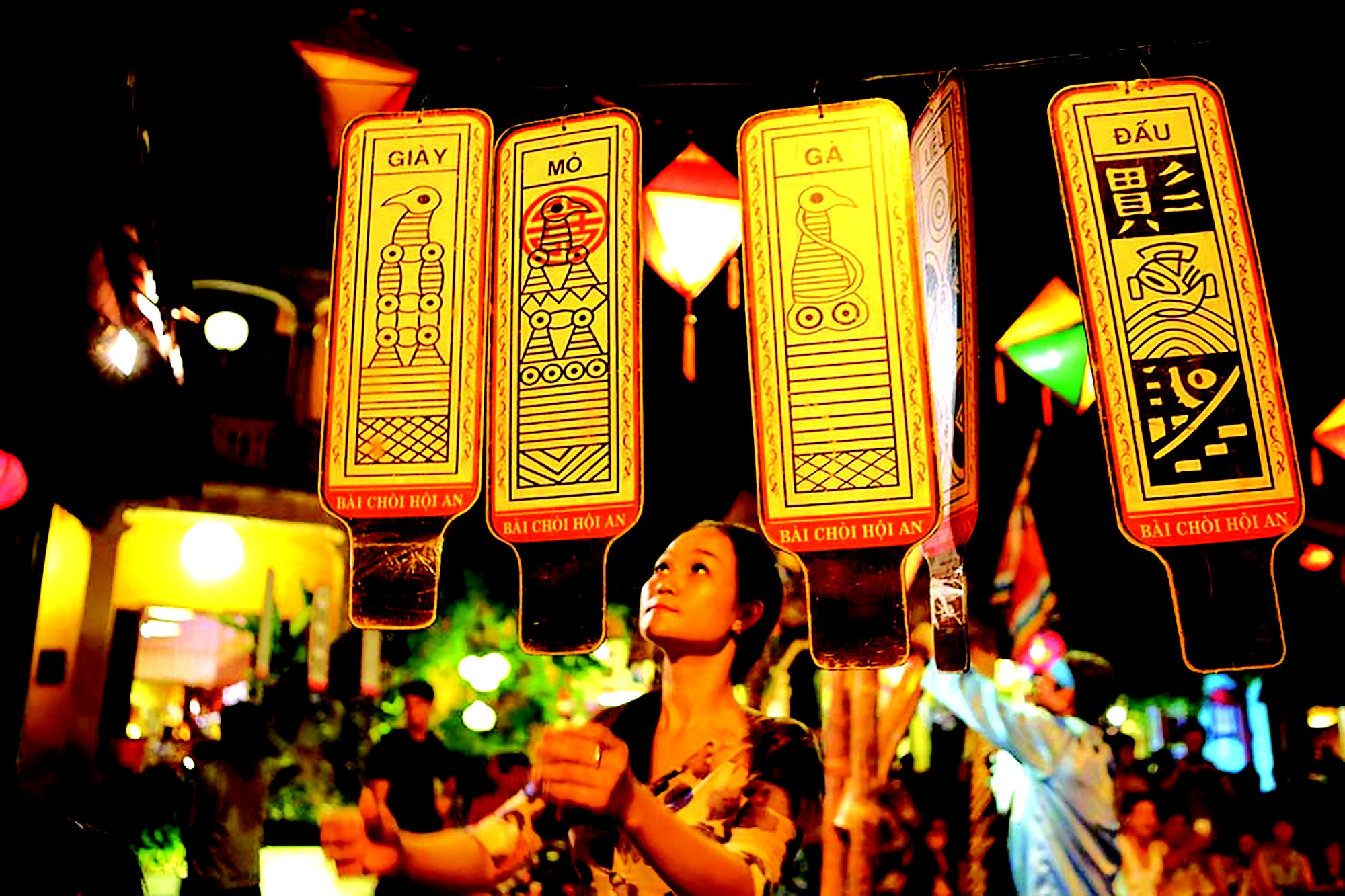
On the 14th night of every lunar month, the entire ancient town performs a ritual of turning off electric lights, replaced by the ethereal glow emanating from handcrafted multi-colored paper lanterns. The space becomes silent and sacred, transporting visitors back in time to the setting of an ancient trading port. The rustic sounds of Bai Choi singing rise by the Hoai River, while folk games like pot breaking and bridge walking always attract large numbers of international tourists, creating an invisible cultural bond.
The system of communal houses and shrines here worships guardian deities, ancestors who reclaimed the land, and water gods. The absolute respect for ancestry has shaped a Hoi An community that is kind, gentle, and incredibly hospitable. Each visit to Hoi An ancient town Vietnam is an opportunity to contemplate a philosophy of peaceful living and respect for traditional values amidst the rushing flow of modern life.
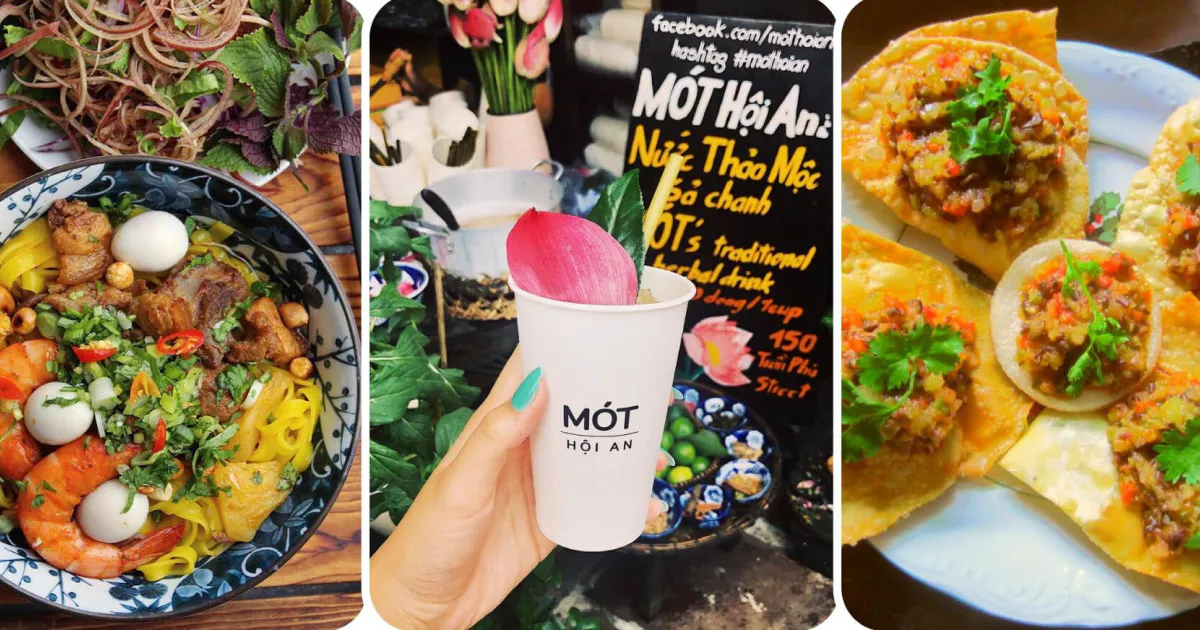
The culinary world here is an enchanting journey for the palate, where the most rustic ingredients are elevated into works of art by the skillful hands of local women.

Sitting on low wooden stools by the roadside in the late afternoon, sipping a salt coffee and watching the world slowly drift by in Hoi An ancient town Vietnam, is the most peaceful moment a traveler can seek.
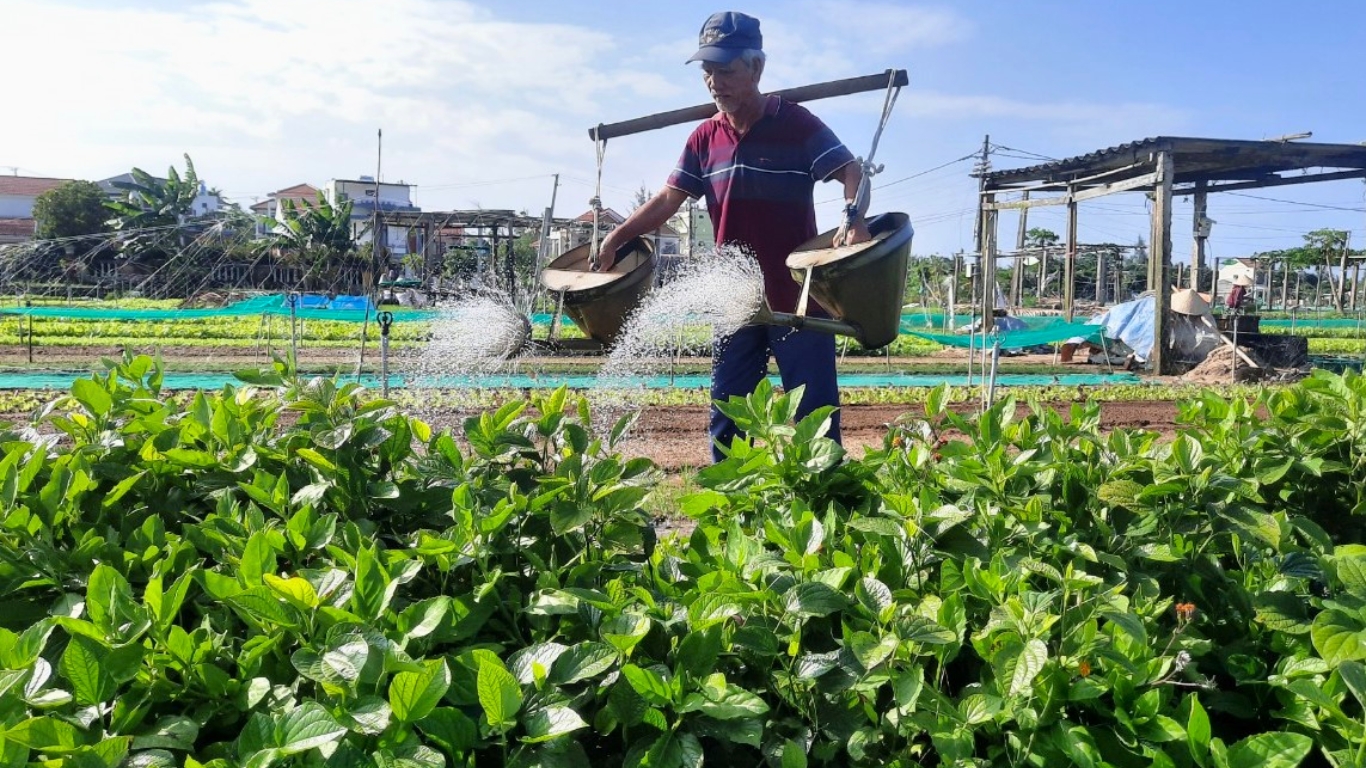
To better understand the development of the ancient town, visitors should not overlook the traditional craft villages located on the outskirts, where the fire of ancient skills is still kept alive.
For a complete and civilized journey, visitors should be equipped with basic knowledge of visitation regulations.

The conservation and promotion of heritage values is a collective responsibility. When visiting Hoi An ancient town Vietnam, be a civilized traveler who listens to stories from the past and respects the elegant lifestyle of the local inhabitants.
As the journey concludes, every step away from the ancient town carries a lingering nostalgia for a space of reminiscence and unusual warmth. Hoi An ancient town Vietnam remains forever a brilliant milestone in the cultural flow of Vietnam. In this place, the past and present intertwine, together writing new chapters of pride in the era of integration.
Are you ready to fill your stomach at the markets in Hue? Contact Simply today to get the most detailed culinary handbook and equip yourself with a powerful connection package for your upcoming journey!
With Simply Vietnam Travel, you can rest assured that every detail of your itinerary has been meticulously prepared. As a specialist in organizing Central Vietnam tours, we offer you a diverse selection of well-structured itineraries that blend sightseeing, relaxation, and local cuisine, ensuring a fulfilling journey to unforgettable destinations.
A Central Vietnam adventure will be far more exciting when you simply bring your sense of exploration, while the planning is handled by Simply Vietnam Travel.
Contact us through the following channels for a free consultation:
The ideal time is from February to April. During these months, the weather is mild, dry, and cool, which is perfect for walking tours and outdoor activities without the intense heat of summer or the heavy rains of late autumn.
While you can walk through the streets for free, you need to purchase an entrance ticket to visit specific heritage sites such as ancient houses, assembly halls, and the Japanese Covered Bridge. The ticket proceeds go directly toward the preservation of the town’s historic structures.
The Lantern Festival, also known as the Full Moon Discovery Night, takes place on the 14th day of every lunar month. On this night, the town switches off modern lights and glows with thousands of traditional silk lanterns.
Not at all. Hoi An is known for its affordability. You can enjoy world-class street food for just a few dollars, and there are accommodation options ranging from budget-friendly homestays to luxury riverside resorts.
To truly experience the magic of Hoi An ancient town Vietnam, a stay of 2 to 3 days is recommended. This allows enough time to explore the historic center, visit nearby craft villages, and enjoy a relaxing afternoon at An Bang beach.