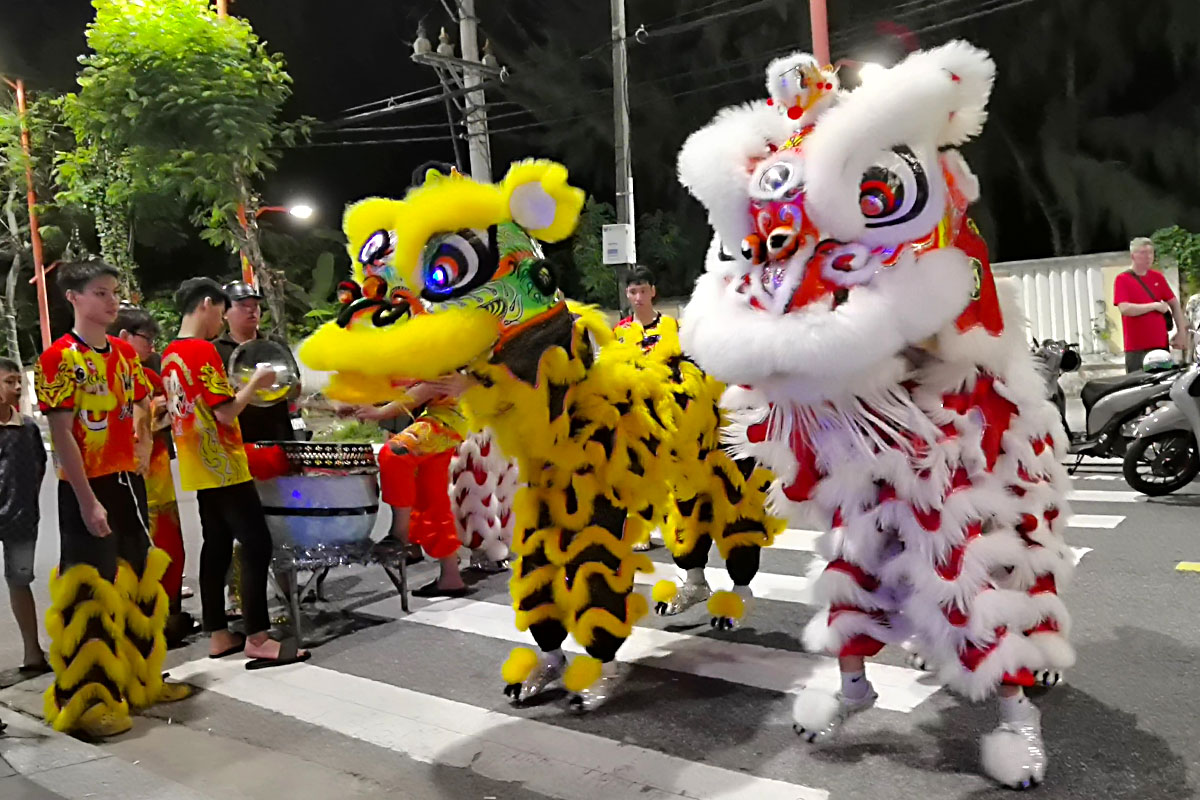
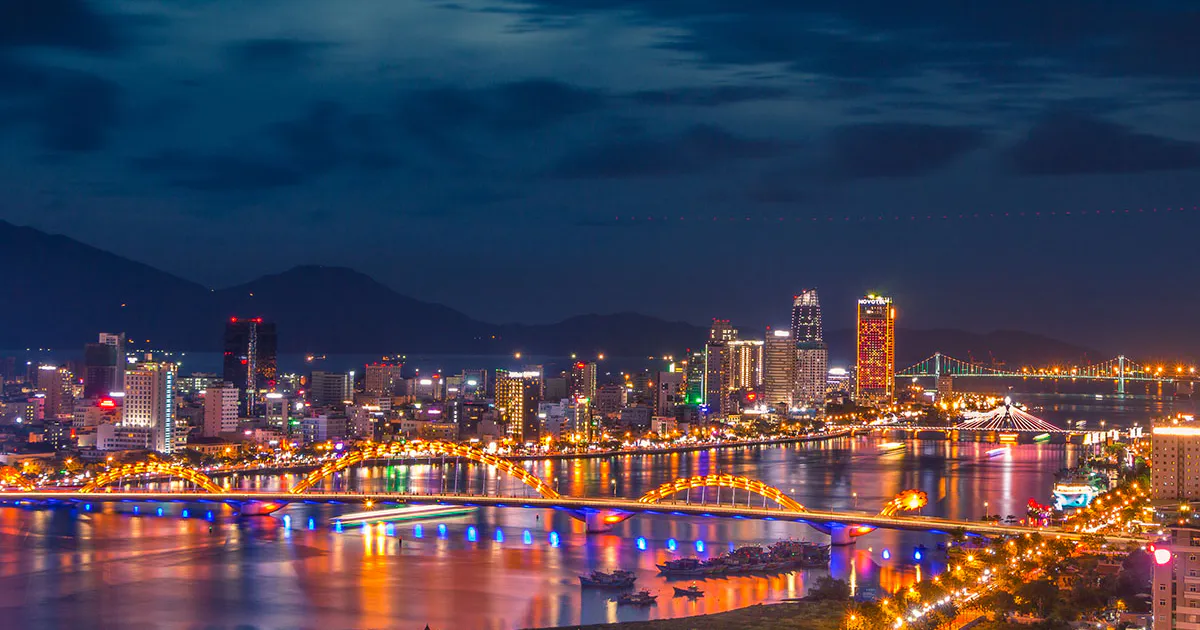
The Dragon Dance symbolizes the city’s strength, prosperity, and cultural pride. The dragon is a sacred creature in Vietnamese culture, representing power, good fortune, and protection. Da Nang’s famous Dragon Bridge, designed in the shape of a dragon rising toward the sea, reflects these same values — linking the city’s modern growth with its deep cultural roots. The weekend dragon fire and water show recreates the spirit of the traditional dragon dance, celebrating Da Nang’s identity as a vibrant, forward-looking coastal city while honoring its ancient heritage.
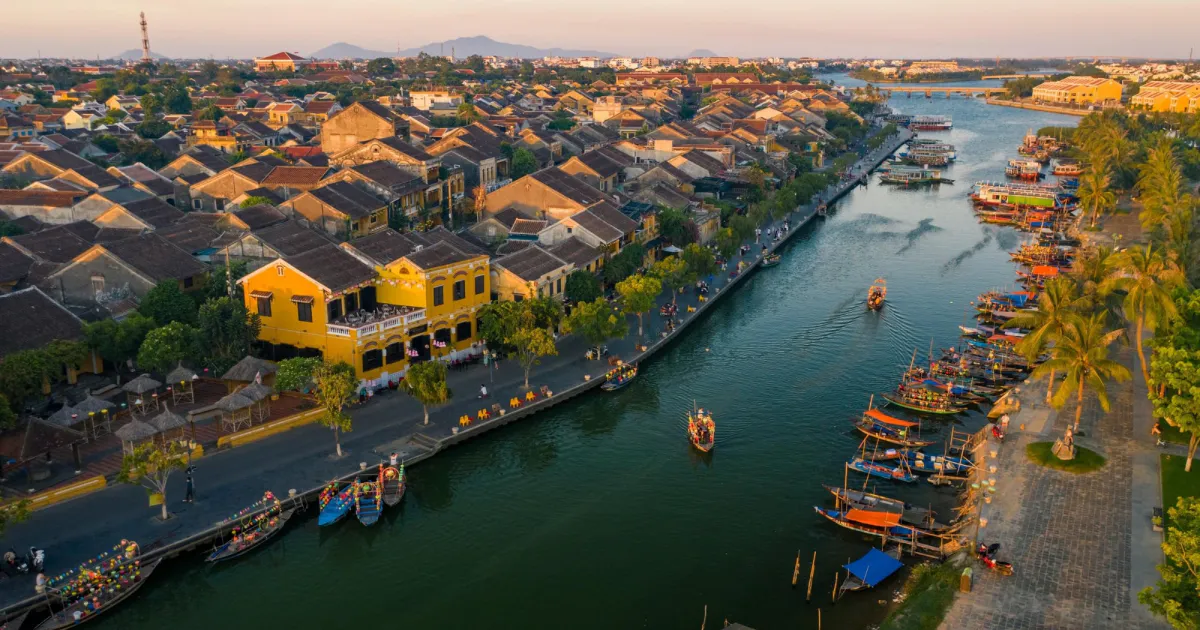
In Hoi An, you can witness traditional dragon dances at local festivals and celebrations, often accompanied by drums, gongs, and fireworks, and considered a symbol of good fortune and good wishes. The lighting of lanterns on the Hoai River is also a related tradition, especially during a full moon. A museum dedicated to the dance recently opened nearby.
Traditional Dragon Dances
Occasion: Dragon dances are an important part of Vietnamese festive culture and are performed at events such as Tet, grand openings, temple festivals, and other celebrations.
Atmosphere: They create a festive and vibrant atmosphere.
Meaning: They are considered a blessing for good luck and are believed to ward off evil spirits.
The Lantern Tradition on the Hoai River
Practice:
Instead of dancing, locals and tourists float candle lanterns on the Hoai River at night to wish each other good luck and peace.
Meaning:
This is a peaceful and meaningful tradition, especially celebrated during a full moon, creating a magical scene on the water.
New Lion and Dragon Dance Museum
Location: A museum dedicated to lion, dragon, and unicorn dances recently opened near Hoi An, within the Sun World Ba Na Hills complex in Da Nang.
Opening: The museum was inaugurated on October 6, 2025.
Purpose: It is the first museum of its kind in Vietnam dedicated to dance.

 Travel-1
September 23, 2023
Travel-1
September 23, 2023